How clutter can impact your family’s health
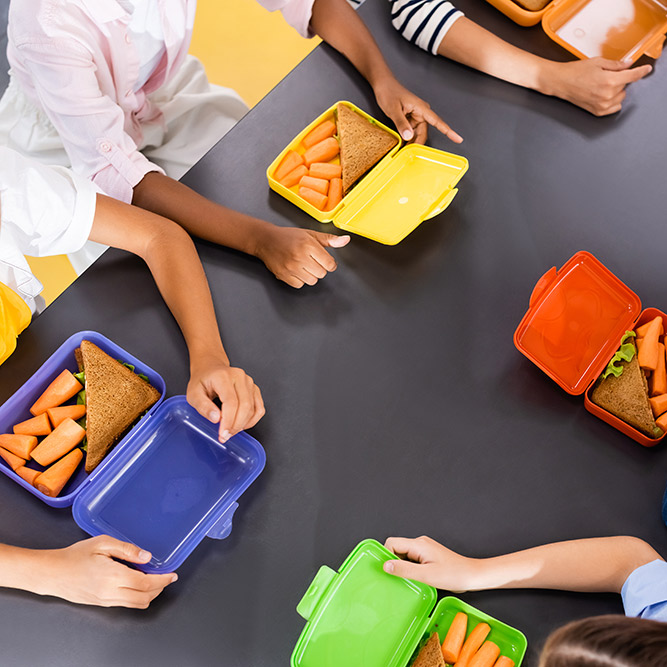
5.2 billion $ a year are wasted in Australia on food that’s bought but doesn’t get eaten.
With a projected population of 22,836,899 for Feb 2012 that is $227 per person per year. For an average family of four: $908 per year. A big enough amount of money to start thinking and changing something. A considerable amount of production cost, packaging and transport wasted. What’s the ecological footprint of that sum and what can we do about it?
I tried to get information about the ecological footprint, but found that too hard to calculate, as even experts are not agreeing on what needs to be taken into consideration when coming up with a meaningful ecco footprint number. But I do have a few ideas about why we do it and what can be done about it:
I think everybody is guilty of throwing some food out – but it should be the exception, not the rule. Nobody does it intentionally and there are varied reasons why it will get to that point.
· People have very high standard when going shopping and all good intention to “home cook this week”. And then never get around to it.
· Lack of planning ahead and impulse buying.
· Some people can cook and would love to do it, but are so overwhelmed with the clutter on bench top and dinner table that they rather feed the kids baked beans in front of the TV.
Sometimes it is the second generation eating like this. A lot of my clients tell me, that they never learned. When Jamie Oliver filmed his Food revolution in America he made a comment about his utter surprise about kids who had never, at the age of 10, used knife and/or fork. For them food is always finger food!
I think we have to distinguish between eating as the task of putting food in one’s mouth so you don’t starve and eating as in family dinners, sharing stories and food. Food needs to be appreciated – kids have to develop a relationship with food, they have to learn about food. But it’s not just lack of cooking skills and time and ability to use a knife and fork. I am a Professional Organiser and come across a lot of families that basically don’t have a dinner table they can use.
And that’s not because they don’t have that piece of furniture, but because it’s so full of clutter that nobody eats at it.
So mums feed the kids in front of the TV, that’s easy and very non confrontational. As far as I am concerned, you might as well serve Play- dough! And when dad comes home, the parents do the same, balancing their plate on their knees.
No wonder kids grow up with some sort of eating disorder, either too much or too little, because who would go to the effort of cooking nice food if nobody really gets what’s eaten , distracted by watching TV or bored because they eat on their own
·
By being mindful of these reasons, there are easy ways to work against that over consumerism:
· meal plan
· Shop with a shopping list.
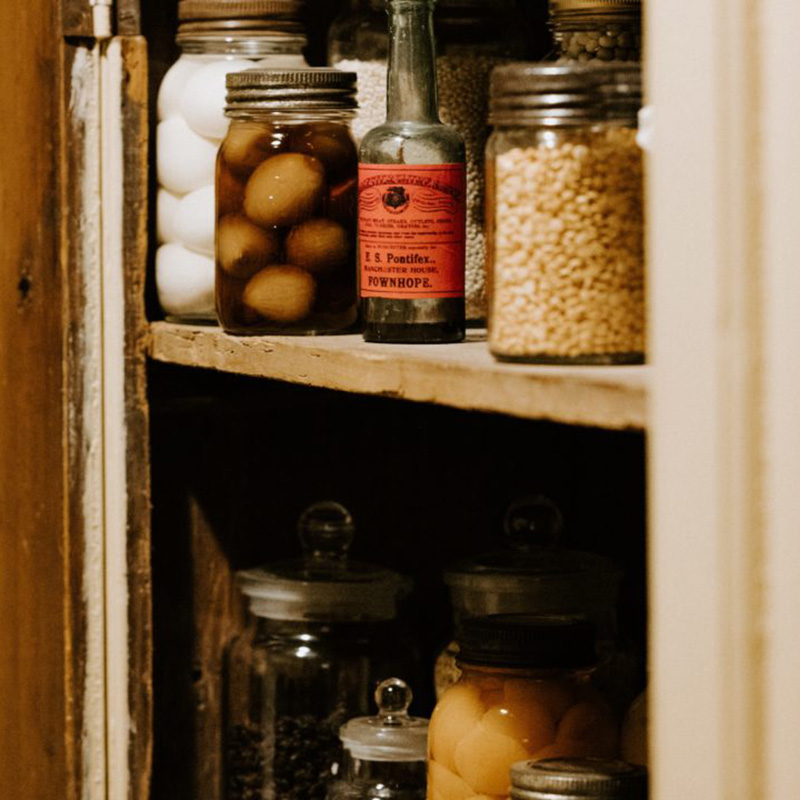
· Organiser your pantry – every half year!!!!
· Ask for help and learn
· Always unpack the dishwasher – this one sounds a bit out of line, but if you treat the dishwasher as a cupboard for dirty dishes rather than clean ones – you are not going to have to clean away mountains of dirty plates before starting to cook all that delicious produce you bought.
I am oiling my jewellery

Hubby decided to renovate walls and ceiling of the bathroom on the weekend– without notice, and AFTER I MOPPED THE FLOOR IN THE WHOLE HOUSE!!
Living in an old house, there is always more renovating work once you get started, because some of the render just basically fell in his face. So we took off what came easily – and decided to do the same all around the hose and then call for my favourite handymen to ‘fix it’.
This is why I have been oiling my jewellery today, because there was a patch of render coming down just above where my pieces hang on the wall. You see, my dad makes my jewellery – I wear almost nothing else. He even made our wedding bands! He uses silver, tin, old baking trays, leather, pebbles and lots and lots of time to come up with the (for me) most beautiful, earthy, ethnic looking pieces. A lot of them are pendants on a leather string – hence the oiling. The drilled and cut up baking tray loves a bit of lubricant, too.
In the process, I decluttered a bit – but it’s hard to let go of handmade things for me – so I might ask my kids what they think about wearing a bracelet.
Don’t hide them
This is one of a pair of painted perforated metal sheets I use to hang my jewellery. The holes fit a M4 screw and I designed it so I can hang long pieces at the top and store bracelets and earrings at the bottom. I have had it for more than 15 years and I love it because I can see my bling even when I am not wearing it.
Houshold Tip
Freecycle
Two weeks ago I joined freecycle. Should have done it much earlier. I heard about it a few years ago through a friend of mine who, as it now turns out, is the ‘owner’ of the Sydney Central group. Other friends have been using it and rave about it. Finally, I had a customer end of last year who was using it very successfully.
You know how it is a lot of times. You decide to let go of something, it gets put in a pile or a box, then you forget about it or don’t have the time to move it OUT OF YOUR HOUSE. When I work with my clients, I always take all the stuff that might be of interest to a charity shop, but they don’t take everything. Bulky items, stationery and toys are often left for the bin, which is sad and makes it even harder to let go.
And that’s where Anne put it onto freecycle, and it was gone three days later, to be used and hopefully loved by another family.
Here is how it works: Freecycle is a not for profit worldwide organisation. It is organised into local groups, so driving around is kept to a minimum. Their aim is to keep items out of landfill. All posts are moderated and there is a code of ethics so everyone feels safe and happy.
You can find out what regional group you would belong to here. You join through Yahoo groups and post with e mails send to your local group.
You can post things you want to get rid of, but you can also post ‘want’ items. The first things I posted where 8 unused cane garden torches – taken out of the garage during de clutter, we had a couple of weekends ago (our council clean up day is coming up). They were brand new and have been hanging around far too long. They are really not rubbish and someone picked them up and used them at a garden party (although, garden party is slightly unlikely with the weather we have been having in Sydney). I also posted a ‘want’ item, because hubby promised me to install new edging around my veggie beds for my birthday next month. Everything in the shops is just too expensive so this could be a great way to help me. He is going over to pick up some wooden planks in Leichhardt this weekend!
1. Go here and find the right region in Australia (sorry to my overseas readers – but it started in the USA so you are bound to have the same) http://www.freecycle.org/group/AU/
2. next page leads you to select a more detailed local group. You can check out what’s been posted and what’s wanted. At the bottom of that page click the ‘Join Group’ button and follow the instructions. A message will come to you to confirm your email address, then another asking for your suburb (this is to ensure you are joining the correct group)
3. once accepted into the group, you can elect to receive every post in a separate e mail, a twice daily digests, or just look it up on the site whenever you need something or feel like it.
At the moment I read the digest twice a day – . It’s an intersting read and good to know what other people post or want. We might have some of the ‘want’ items lurking in the shed or in my kids chaos(= kids bedroom)
updates anyone?
Yesterday I, together with my blog admin person, updated to a much newer version of this blog software. Mine was so old, it was almost impossible to find a plugin to save the content (in case anything goes wrong with the update!)
Luckily nothing did go wrong, and I hope that the other important plugin, the one that automatically posts to my Facebook page is working.
That’s the sole purpose for this post – to check it out. Oh, and I better find a photo, too!!!
Fashion Embargo
An Organiser colleague of mine in Adelaide has set herself a radical, but brilliant challenge/New Year’s resolution.
She decided it was time not to shop for clothes for a year. I think it’s a fantastic idea. Personally , I don’t think I could do it, and I hate cloth shopping, but I might not have enough clothes to get me through a year (don’t ask about shoes, though!!). However, a lot of people do have enough clothes to last them a lifetime! Or bed linen, or towels, or…shoes! And it doesn’t have to be a whole year. What about using lent (that actually started 2 weeks and goes until Easter Sunday) to commit to your own little mini challenge. If you want to know more, and the rules for the fashion embargo please read Rebecca’s Blog or join the conversation on facebook!
start now!
With the first couple of school weeks under our belt – we start to see the weak points in our and our kid’s time management. I am a believer of nipping it in the butt early, so my kids start using a diary of sorts from year 3 onwards. I have drawn up our own A3 sized term planner: undated so I can photocopy the same template for every term for every child. They fill in the dates and colour in the weekends themselves. We then sit down and write in fixtures: like German lessons on Monday afternoons, or rowing on Sunday morning. As soon as homework starts we allocate days for the reappearing, every week tasks they have to do. For the older kids, we start back-calculating from assignment hand in day; to find a good way of project managing that task – which doesn’t mean me rushing to Officeworks on the morning it has to be in to have something spiral bound or laminated.
Again, different days of the week lend itself to different activities. If you know you don’t have internet access, what about creating a reading folder and take a highlighter to actually read through all the websites you found in your research. Try to do the physical acitve homework parts on the days they have extra curricular academic lessons like musik or language.
It works pretty well – although Mr. (almost) 9 prefers a little booklet he can carry with him and ignores the Term Planner – but that’s fine. Even kids have their own organising style and as adults, we just have to find a way of helping them find and use that style. It seems to work for him. He told me very proud in the car this morning, that, thanks to his diary, he didn’t forget his library bag!
P.S. If you want something to start with for your own term planner. I have a pdf version of ours I am happy to share. Just pop into the comments box and I’ll send it to you
Pathway through the Maze
There was a fair bit of media attention around hoarders in the last two weeks due to the National Squalor Conference here in Sydney. This little video was posted on YouTube by my dear college Wendy in Melbourne. She clearly is an expert on working with Hoarders.
Declutter your life and lose weight
LessMess is the expert commentator on this week’s feature article on the InShape NewsFlash blog
“Many of us are guilty of having a cluttered household. This, not only makes it stressful to find what we want, when we want it, but it also can lead to health issues.
According to McMillan & Company Professional Organizing, some 80% of clutter in your home or office is the result of disorganisation, rather than a lack of space. They also estimate that by decluttering your home you could eliminate 40 percent of your housework.
Susanne Thiebe, an accredited expert professional organiser who holds a an engineering degree in interior architecture, says that clutter is a health concern.
“Professionally, I realised that people with a lot of clutter often have health issues,” she said. “So by helping them declutter, I help them get healthier,” said Thiebe.
Thiebe says she was motivated to develop her professional organising concept because a lot of customers had health issues.
“It occurred to me that my customers health issues might not be the reason for their clutter, but rather, the other way around,” she said. “You get depressed if you have too much stuff.”
“Just by observation, I realised that some people hold onto stuff and this includes their weight,” said Thiebe. “It’s about change management, loosing fear, embracing new ideas and following healthy routines,” she said. “It might sound like a weight loss program, but it is more of a stuff loss program.”
Thiebe believes that by starting the program and shedding clutter, people often discover that they can lose weight, and vice versa.
“I am motivated by my customers tears of gratitude,” said Thiebe.
Thiebe says that listening to yourself and making time is important.
“Listen to yourself, it’s your life, not someone else’s,” she said. “There is no such thing as ‘not enough time’. If you claim not to have time for something then you should really say that you don’t find it important enough.”
Thiebe believes in incidental exercise and using your daily surroundings to workout. She says that it is vital to maintaining your health and fitness.
“Replace driving with cycling and walking, and take the stairs, not the lift,” she said. “Also have a weekly meal plan and stick to your shopping list.”
Decluttering your life begins with your home and then it progressively develops into a lifestyle choice.
David F. Tobin Ph.D., director of the Anxiety Disorders Center in the United States, says in Consumer Reports on Health that clutter can be hazardous and unhealthy.
“Clutter might create a fire hazard or vermin infestation, or keep them [people leading cluttered lifestyles] from walking around in the house,” said Tobin. “They have an exaggerated attachment to items and that prevents them from discarding things,” he said.
“We recommend cognitive-behavioural therapy, in which we help the person identify and change irrational ways of thinking and practice new patterns of behaviour,” said Tobin.
According to a study conducted by Clutterless Recovery Groups Incorporated, a clutter addict recovery group situated in America, some 74 percent of clutter addicts felt they needed therapy. Some 37 percent of the 1000 people surveyed said they suffered from clutter anxiety, and 24 percent considered themselves to be depressed most of the time.
Karen Kingston, author of ‘Clear Your Clutter with Feng Shui’, states in her book that clutter can make you feel tired and lethargic, can affect your body weight and cause confusion, as well as generate a sense of shame.
“A curious fact I have noticed over the years is that people who have lots of clutter in their homes are often overweight,” said Kingston. “I believe this is because both body fat and clutter are forms of self-protection,” she said. “By building layers of fat or clutter around yourself, you hope to cushion yourself against the shocks of life, and particularly against emotions you have difficulty handling.”